This is a growth opportunity! You can improve!
Processing Failure: You are not your grade:
Failure to achieve your goal does not mean that YOU are a failure! Failure is a normal part of
learning, and can provide an opportunity for growth.
Moving forward:
1. Re-asses your game plan and study strategies:
- Start with what you know is challenging, and plan to tackle those difficult topics first.
- Discuss possible new strategies with instructors or TAs.
- Work with a peer partner to test understanding.
2. Establish a growth mindset:19
- Remember your aspirations and let your goals inspire you.
-
Don't listen to internal voices that undermine your confidence. Instead, try some of the following:
- When I learn how to do a new kind of problem, it's growing my brain!
- If I feel like I am not good at something, add a "yet" to the end. "I haven't learned how to do this yet."
- The point isn't to get it all right away - the point is to grow my understanding. What will help me get better at what I want to learn?

Reflect on how you prepared for this test?
- Did you feel like you spent a lot of time studying and yet still weren't successful?
- Remember that *time* spent study does not always equate to better outcomes. It may be that you are not using the most effective study strategy.
Different strategies can help you reach different levels of understanding. Finding the right study strategy on your own can be challenging. You can return to the Strategize section to review effective strategies.

Your test is now a tool
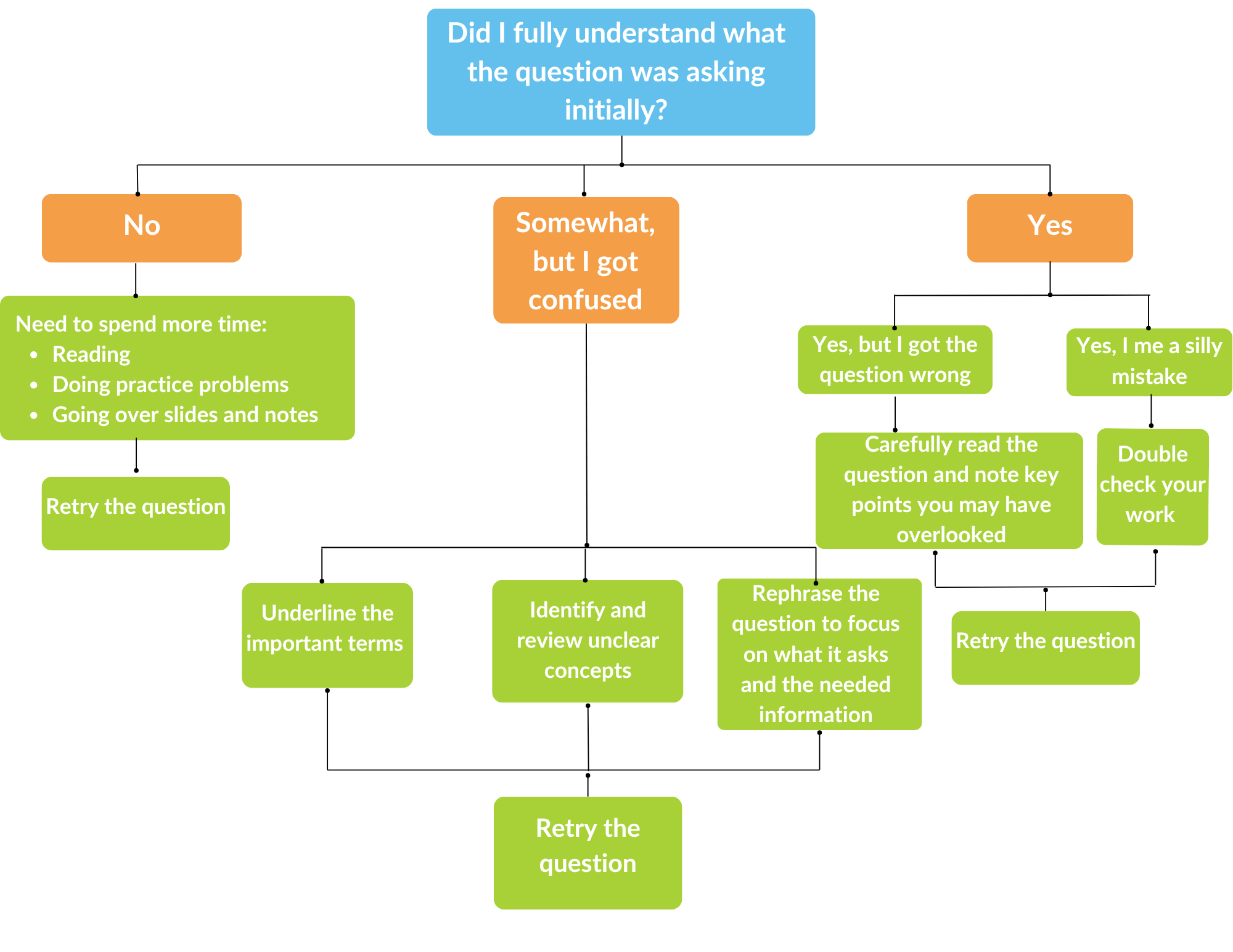
Review your answers to identify what you got right and where you made mistakes. Use this diagram to help you identify where/why you made mistakes on your test:
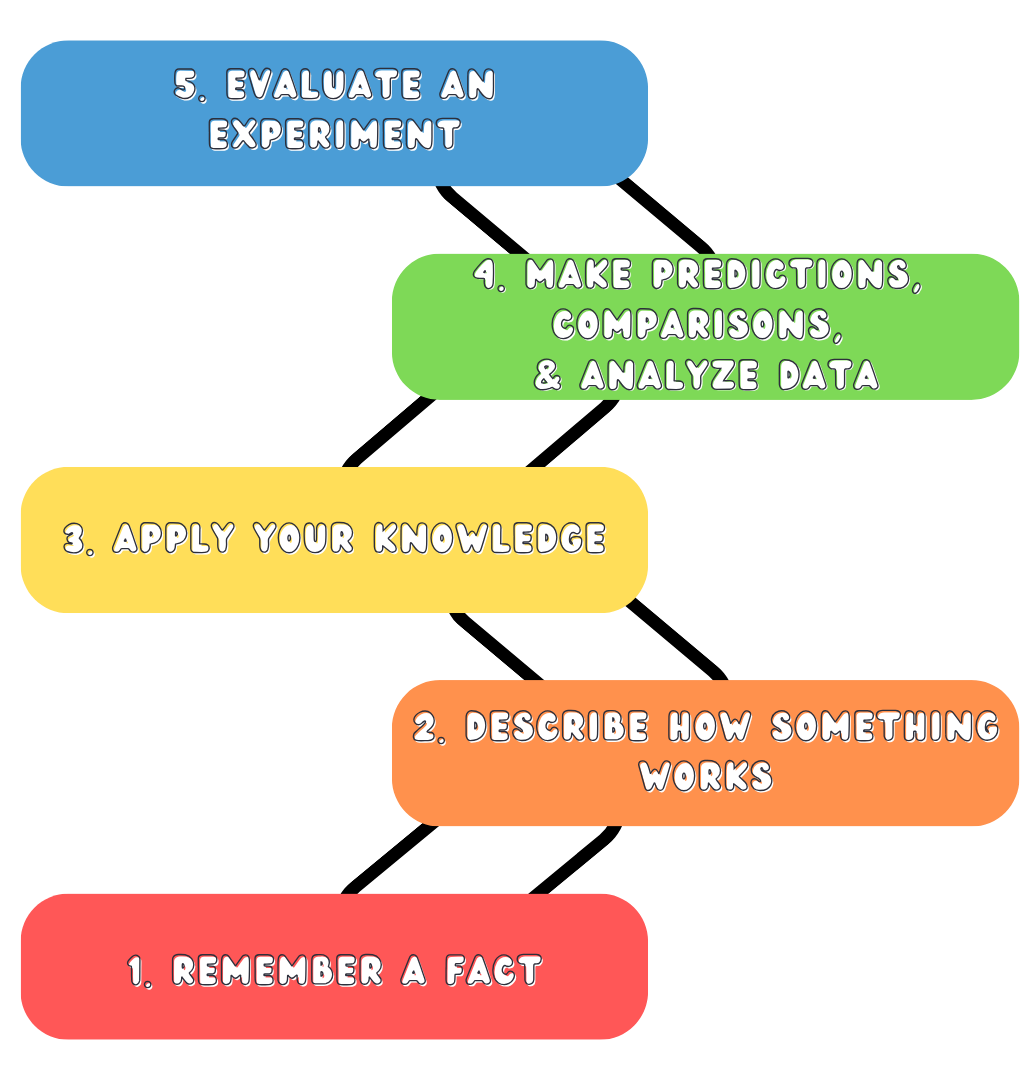
Another tool you can use is to think about your "level" of learning8. This can help you identify what was easy and what was challenging.
What types of questions were challenging?
You can use this diagram to :
- Identify the types of questions you got wrong.
- Assess whether your study strategies helped you reach the necessary level of understanding,
and whether a different approach could help.
- For example: If you memorized a technique but missed a question asking you to interpret the results of that technique, this suggests you only learned the concept at a superficial or "low" level.