Setting goals can guide and motivate you.

In this section, we'll explore different types of goals and help you articulate your own personal goals.

You can take a standardized approach to goal setting. Let's start with an example. Click on the thought bubbles to set goals.

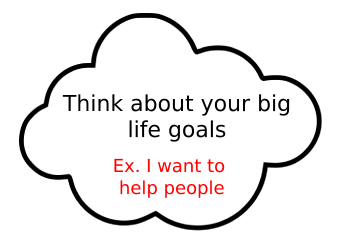
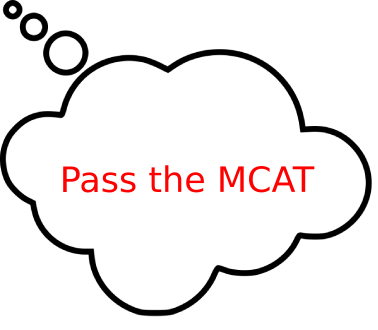
Career planning flowchart Thought bubble Career choice: social worker Complete bachelor's degree Gain experience by volunteering Complete social worker certification Career choice: Doctor Apply to medical school Pass the MCAT

Even if you are unsure about your future plans, developing good study habits will provide you with skills you can apply in any situation.

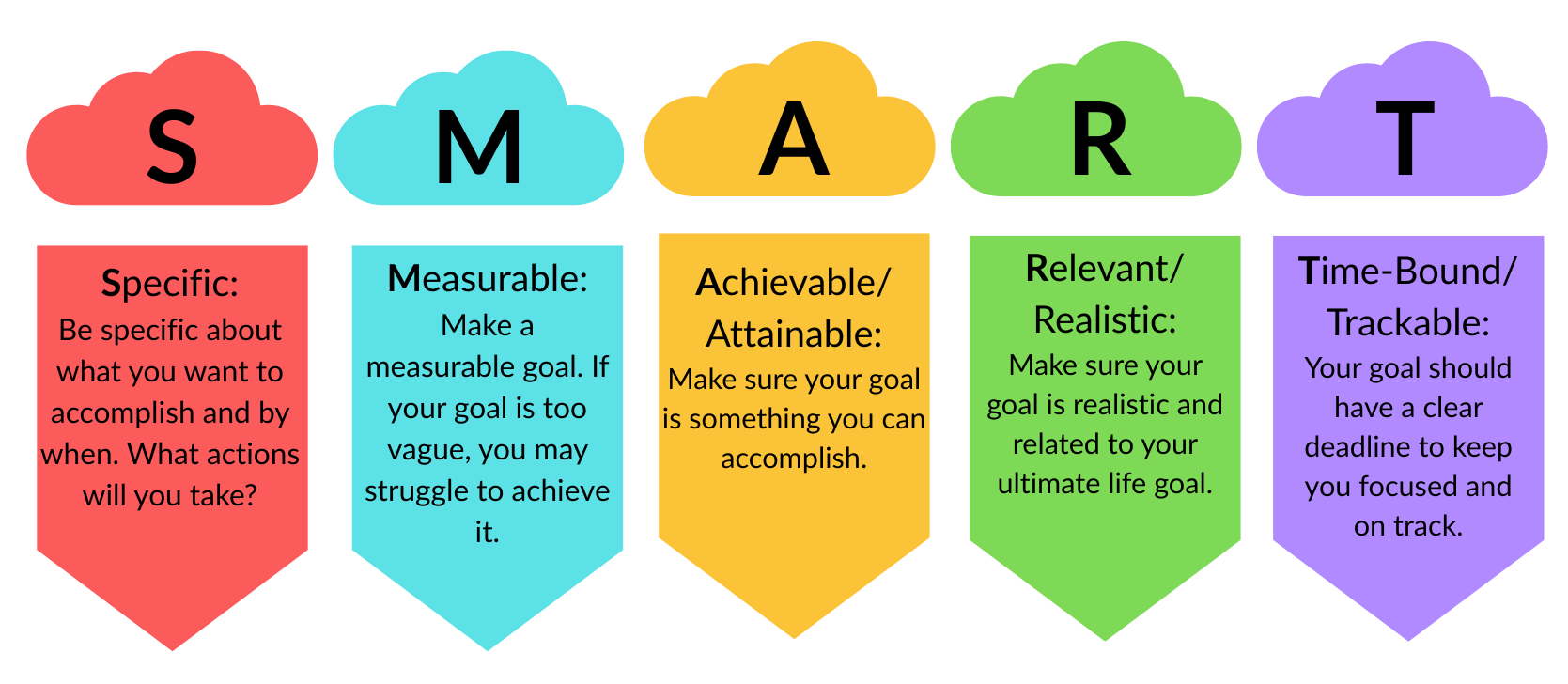
You can use these criteria as guidelines to take small, well-defined steps9.

Here are some examples of possible SMART goals:

  • One week before the next exam, I will complete the practice exam and/or study guide and visit office hours to review my answers.
  • Every day after lecture, I will review my notes and add any new terms or ideas to a Quizlet. I will use Quizlet to study from 2-3 PM on Sunday, Tuesday, and Thursday.

Other things to consider while making goals:

  • Have both performance (grade) and knowledge (understanding) goals. A lasting understanding will help you in the future10.
  • Stay motivated: remind yourself of your aspirational goals. If an outcome is not what you wanted, you can plan for the next time and attack your goal again10!